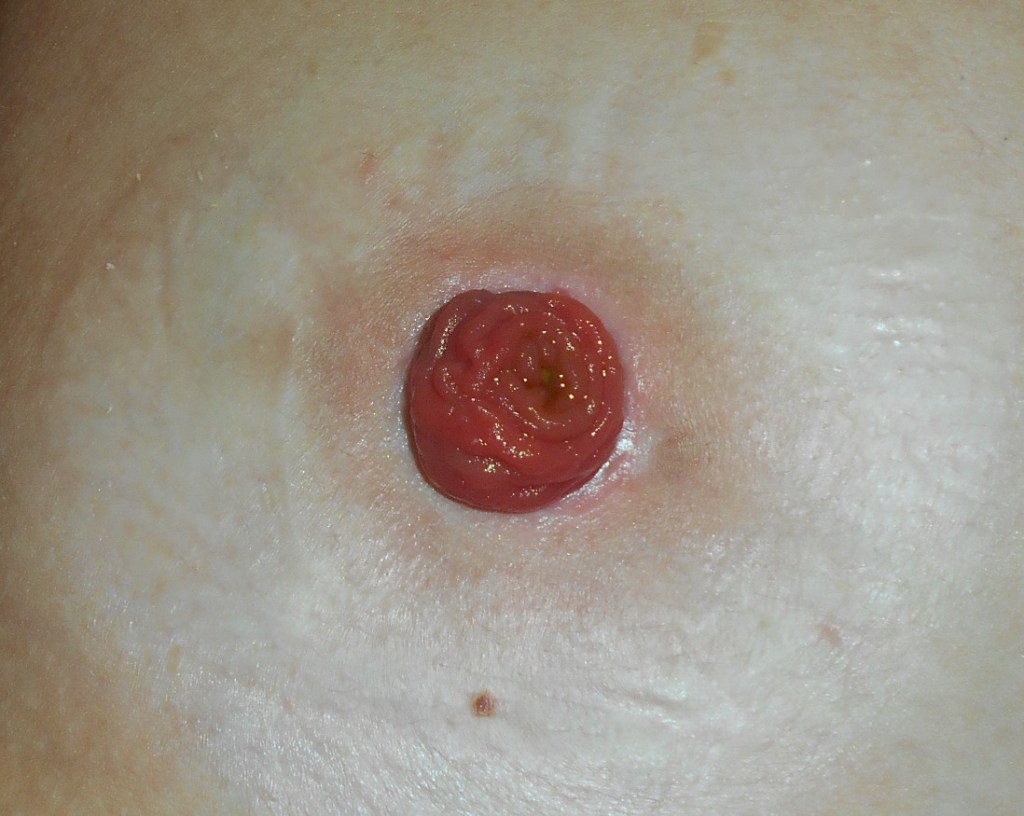
The literal meaning of stoma is mouth or opening. During surgery to create a stoma, the surgeon brings a part of the bowel out through a cut in the belly to allow the patient to pass out waste materials through it. This way, a stoma diverts the passage of wastes away from the lower part of the GI tract. The patient then has to wear an odor-proof ostomy pouch over the stoma to collect waste materials.
Depending on the reason for surgery, a patient can have a permanent or temporary stoma. A temporary stoma is formed to allow the bowel to heal from a disease or injury.
What does a stoma look like?
A stoma is created by bringing a part of the bowel out through the abdominal wall. It can be the end of the small or large bowel, depending on the location of the underlying reason.
A stoma is pink or reddish and moist. Its surface is pretty much like the inside of the mouth. Since it has no nerve endings, your stoma will not feel any pain or sensation when you touch or rub it. There are, however, many blood vessels in it. Therefore, it can bleed easily when you rub it. Slight bleeding is not a cause of concern, but you may need to consult your doctor if your stoma continues to bleed without showing any signs of respite.
End stoma
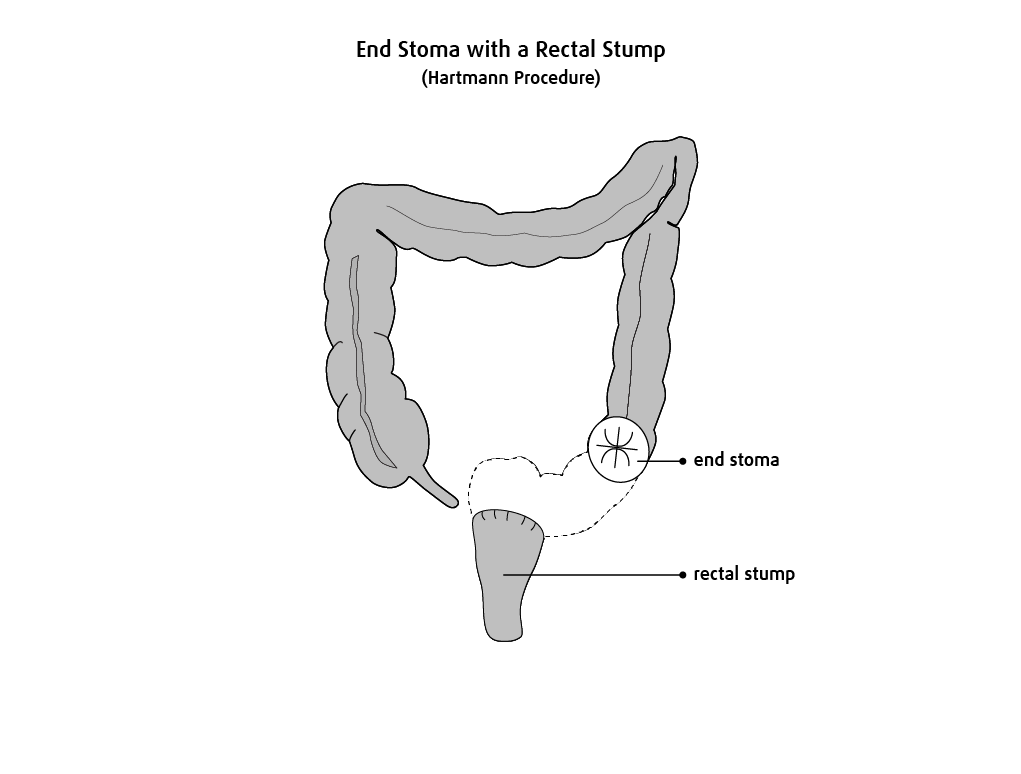
An end stoma is created by bringing a part of the bowel after disconnecting it from the lower part of the GI tract. This stoma passes out stools or urine, depending on whether it is on the bowel or urinary tract.
End stomas are usually created during urostomy surgery. It is also a part of Hartmann’s Procedure to create a colostomy.
Loop stoma
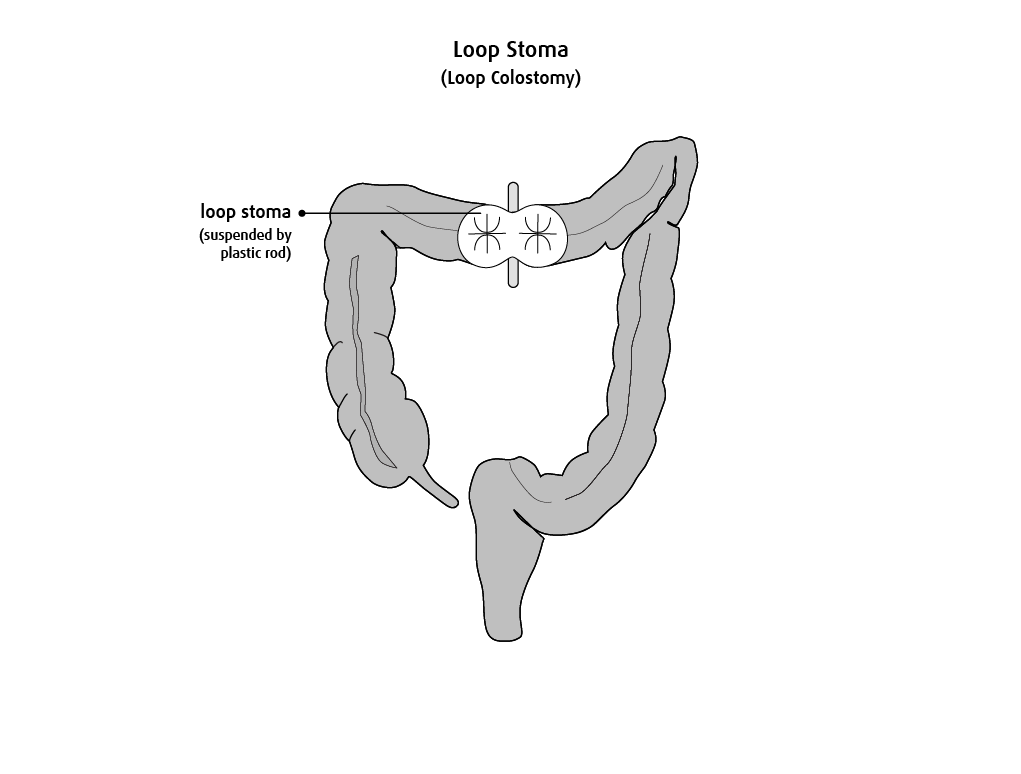
In some cases, your surgeon may choose to create two openings of a stoma. It is most commonly known as a loop stoma. To create this stoma, the surgeon pulls the loop of your bowel out through your abdominal wall. He then cuts the top layer of the loop lengthwise and brings the inner side outward by folding the edges. Those edges are stitched to the abdominal skin. The surgeon may choose to place a plastic rod under the loop to keep the stoma from retracting. This rod is removed 3-10 days after surgery. One of the openings of this stoma will produce stools, while the other will produce mucus.
Living with a stoma
Having a loop or end stoma doesn’t mean an end to your routine life. You can live the way you want. You can eat your favorite foods, travel across the country and abroad, exercise, socialize, and go to your workplace without letting your front point of excretion become your weakness. All you have to do is to be good at taking care of your stoma and the skin around it. There will be a few diet restrictions in place, but they will not be about what you should eat. They will be more about your routine. If you have any concerns, you may speak to your doctor or ostomy care nurse.
 Colorectal Health Blog